| FEATURES | FAVORITE DETAIL | REASON TO CHOSE THE PROJECT | PERSONAL OPINION |
|---|
COMPOSITION
|
|
|
|---|
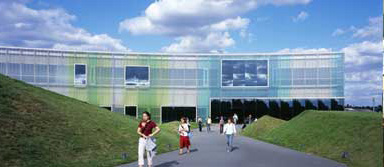
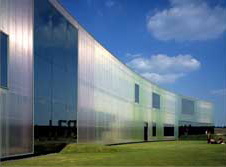
The Laban is a big box by the river, but when new maps are printed they wont represent it as a grey object, it is even very likely that many other of those objects will gain some colour as well. The Laban is in fact multicoloured, it glows at times, at others reflects. It is moving here and balancing there. Its large mass does not stand in opposition to the human scale. It stands in a silent, soft but vibrant and sensual relation with the water. It sets a precedent for the future development of the riverside towards the west, which can make it a unique place, affirming a sense of the local, greater access to the water and repose.
The building is organised by two large, parallel "avenues." The one belonging to the main entrance is of a public character and multileveled on a double height space. The second one is private, it gives access to the dance studios and service spaces and repeats itself three times as its is stacked on all the levels of the building. There is also a wide corridor on the third storey over the main space, which serves some large dance studios and a performance hall. Two minor "roads" running side by side to parallel courtyards interconnect the main avenues. These courtyards are situated in the deepest areas of the plan, in-between the two main axes.The building works like a town, where the circulation is the positive space and it takes shaped by carving its way out of the building's rooms that are considered solid mass.
LIBRARY
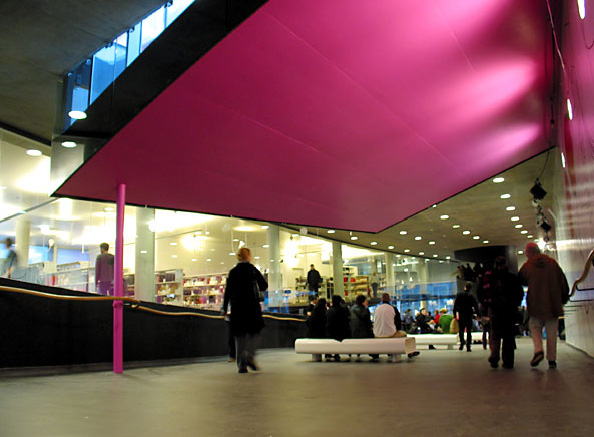
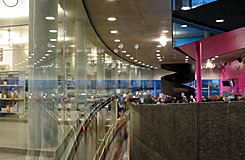
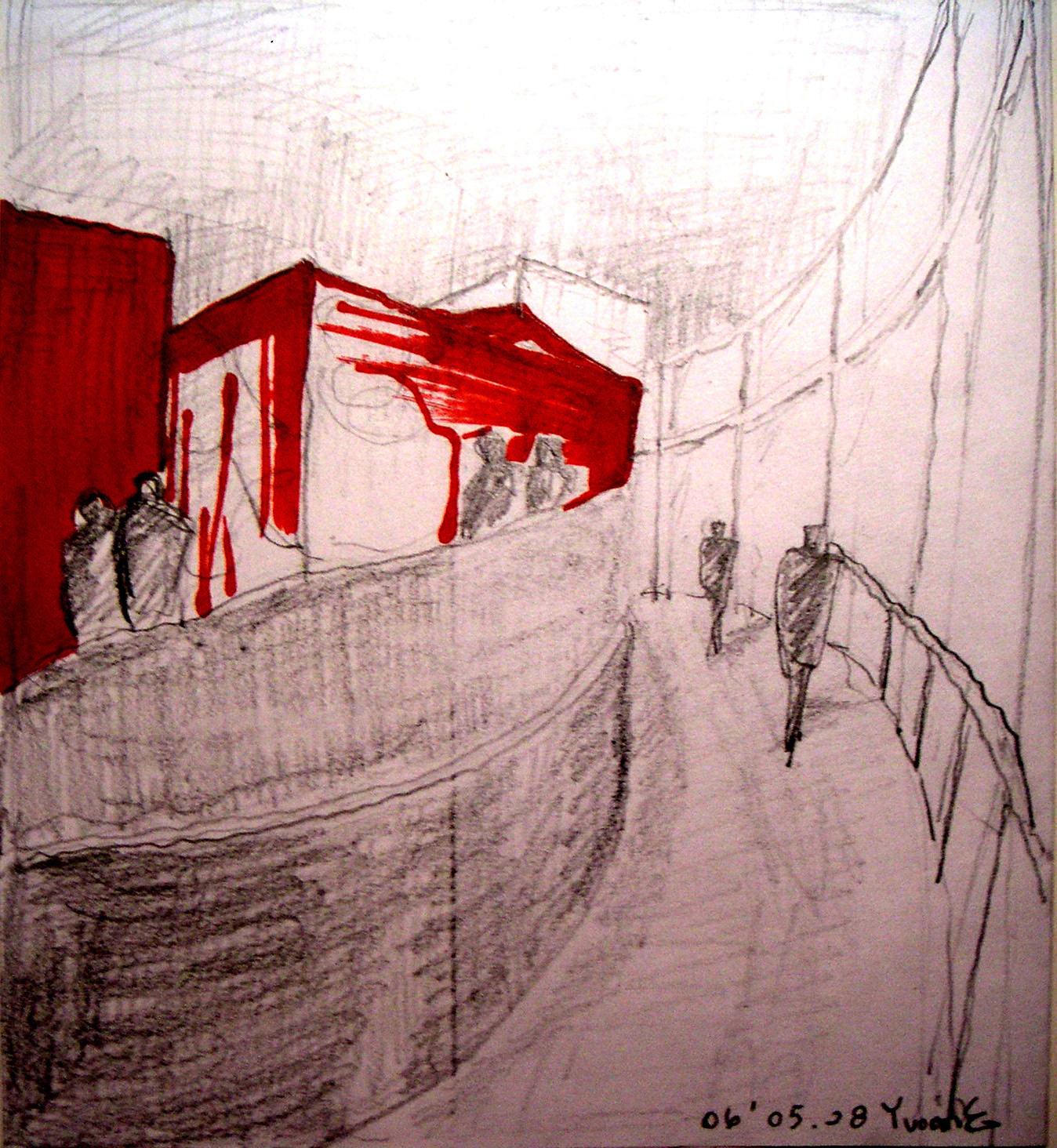
The inner facade of the library is made of glass, depending from which angle you see it, is a membrane of reflections or is almost not there. On the contrary, the ramp of the Foyer is supported by something like the remains of the town's defensive wall. It is the black ribbon staircase that unfolds and pushes up along the ramp, containing it and defining the void that separates it from the library. I do not think that H&deM's practice would use these analogies as part of their design method, however I do believe that there is a particular sensibility and acknowledgement of these elements as typologies for structuring architectural space.
There are no columns or beams clearly in sight within the "citadel" side of the building. Only those inside of the library are show integrally, while those in the dance studios are not evident. Outside, because of the polycarbonate sheeting.The dresses the building, the openings in the facade find their place freely in a way that does not reveal any structural logic. Then if circulation and spatial typologies are the elements that structure the spatiality of the Laban, we must take notice of the two courtyards located at the heart of the building.
DANCE STUDIOS
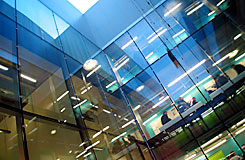
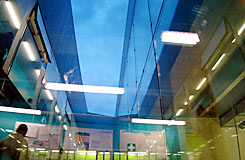
In a dance studio, glass in the form of windows and the ever-present mirrors are an essential element of every room. It can not come as a surprise that the Laban moves forward H&deM's research on this material. The glass in the Laban is "printed" by two kinds of "cinematic effects." First, we have the filmstrip like sequences on the facade and in the foyer and secondly the contained dreamy images floating somewhere within the membranes established by the courtyards.
COLOUR
 |
 |
 |
|---|
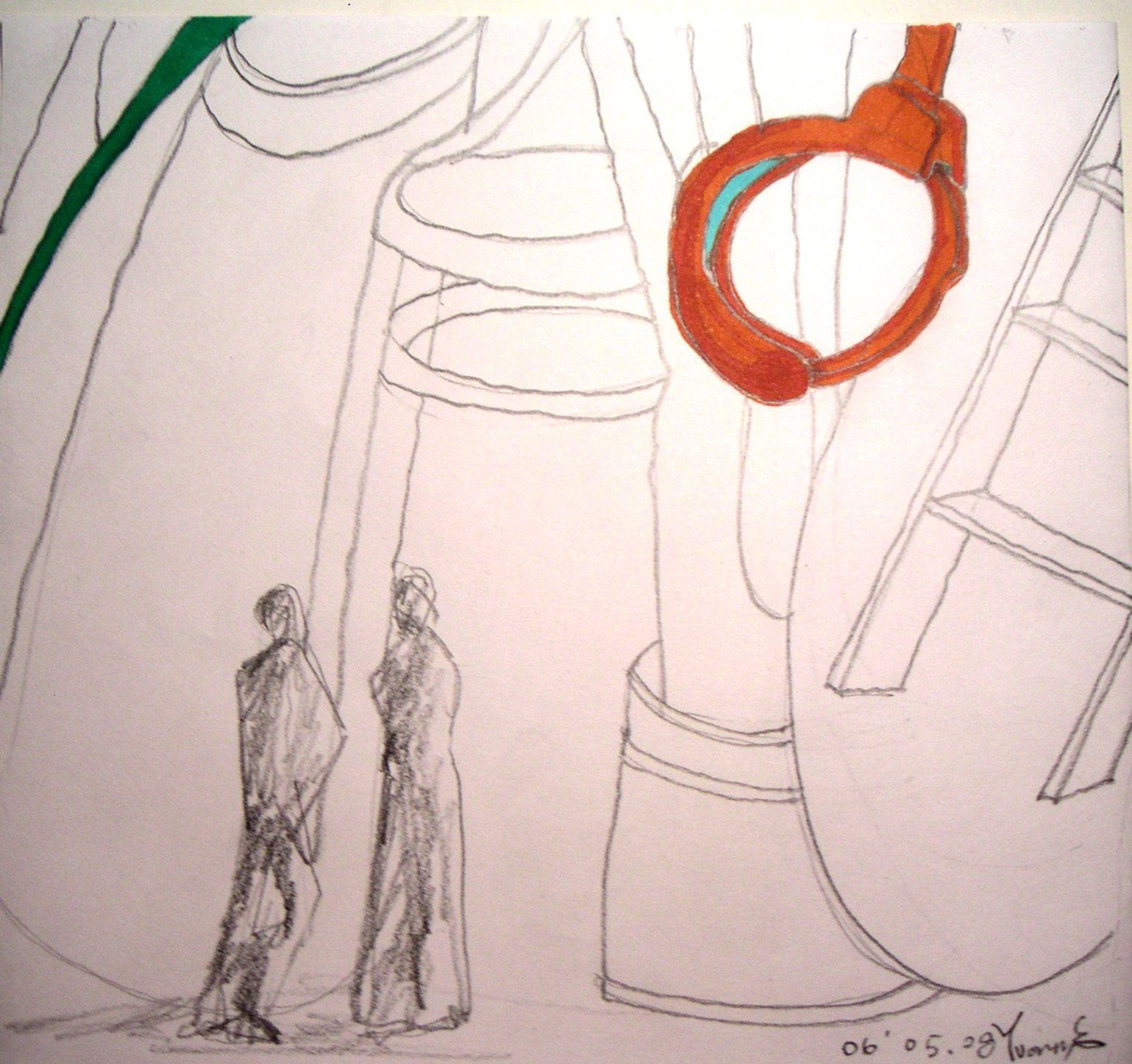
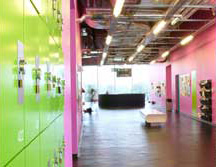
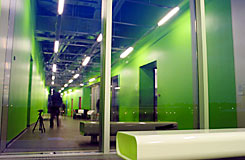
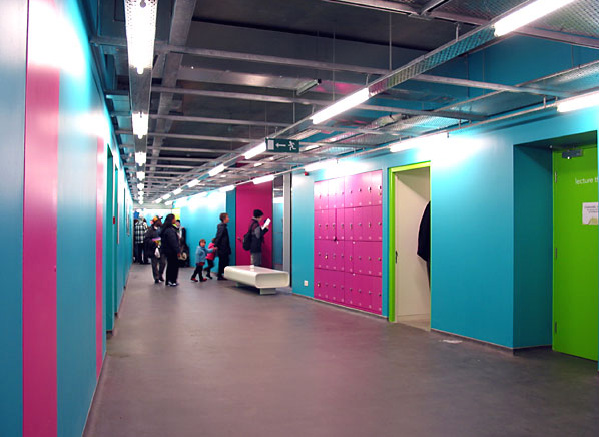
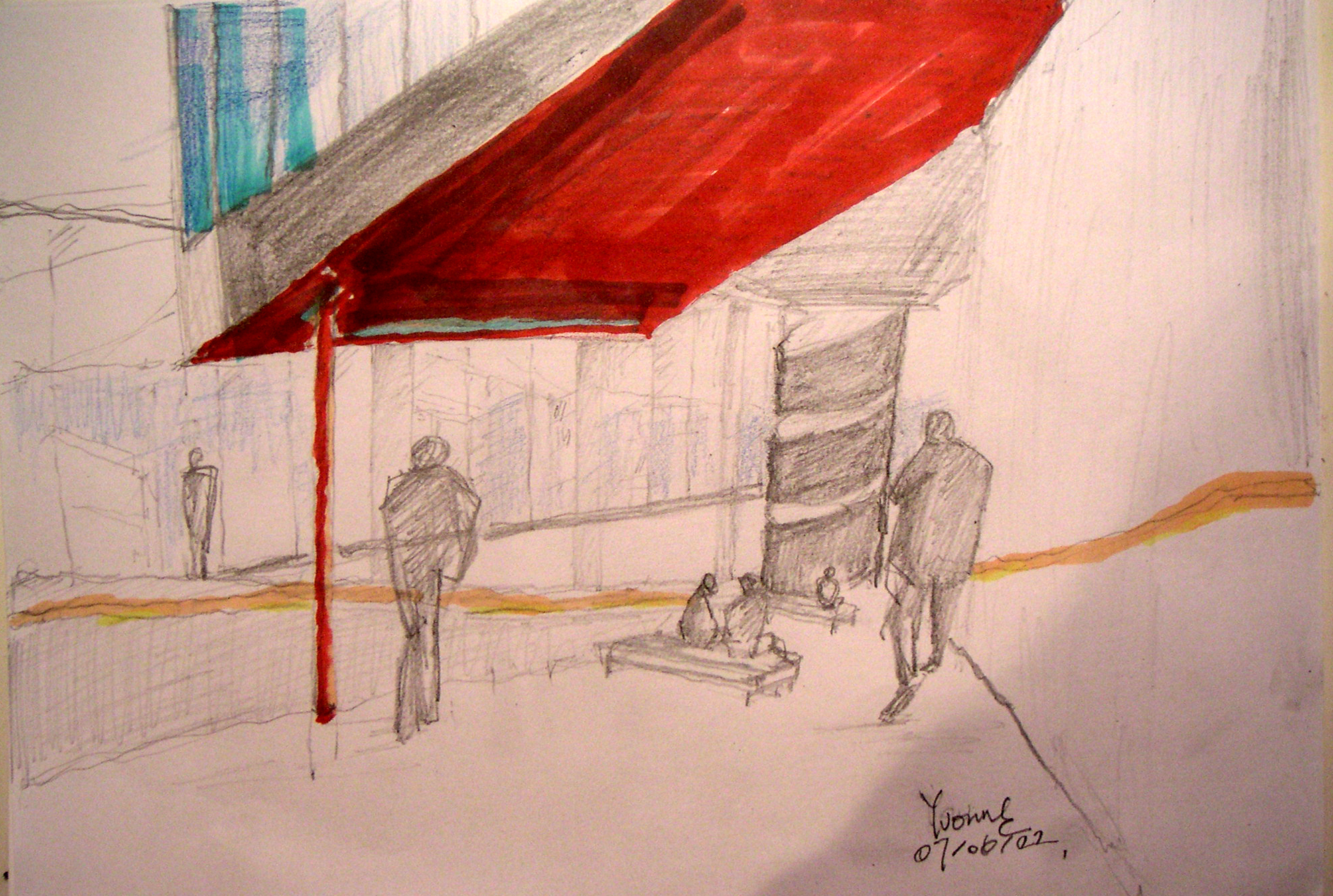
When you approach the Laban the multicolour and soft glow of the facade renders it unique, but when you enter it, there is something resembling of the Tate. Perhaps is the pink, candy tone (this would be interesting because most of this colour exist in the Tate modern website rather than in the building).
GLASS
 |
 |
 |
|---|
The filmstrip appears because the transparent but highly reflective flat glass elements located on curved planes reflect images in a sequence where each element shifts at a slight angle in relation to the previous one. The effect creates a reverberation on the space, its kinetic nature enhanced by any moving thing that happens to become reflected (remember the last fight in Bruce Lee's Enter the Dragon). The floating images are the result of the layering of reflections and transparencies within the four glass sides of the courtyards. Each side reflecting the interior or exterior light at a different degree, an effect that reaches its densest point just before the night falls down. It would be also interesting to see how the almost perpetual London rain would have an effect on the perception of the courtyards.

The reason why I chosed Laban Centre as my report material is because I read the phrase below:
"The shadow images of the dancers, which will fall onto the matt surfaces of the interior walls and facades, have a magical effect and are playing an active part of the Laban's architectural identity." The material quality of the building's facade is described very poetically by the architects
However, also a number of objects piled against the inner facades of the studios by the users of the building, most likely on a spontaneous way, become visible to the outside and the effect is quite cluttered and unpleasant.
In hindsight, I realised that the Tate is masculine. Could we say "Contemporary Doric"? The Laban in the other hand is a feminine building, but not an environment of flat and obvious beauty, instead a mysterious, elusive, shifting and seductive spatiality that keeps you in a constant chase for its secret.The Laban is certainly a place that nurtures life, the building reacts to its environment and to its users; even the wooden handrails on the public spaces vibrate as if energised. Maybe is this inner energy, a beacon of life and art, what the building manifests at day and night with its soft and peculiar glow.